
Cherokee County Criminal Docket Searches
North Carolina eCourts Portal is the place to begin. Choose Smart Search. Enter one basic item: the Enterprise Justice case number, or a party name typed last name first. From there, filter by Cherokee location and the Criminal/Infraction category if the list is long. Your result opens the public Register of Actions, sometimes called the Case Summary. Treat it as a helpful case timeline. It is not the official court record.
There is more than one lane for criminal docket access. Smart Search is the public register route. Search Hearings is the current date and location route. Cherokee's local schedules page links the criminal calendar. Citation Services covers eligible citation matters only. When a result is missing, a file is old, or you need a copy or certification, go to the Cherokee Clerk of Superior Court counter or a statewide public self-service terminal. The Clerk can also point you to the right path by phone. Cherokee accepts mailed payments, but no criminal-document mail form is published. Ask the Clerk for copy instructions before mailing anything.
- Copy the case number exactly from a notice, citation, order, or Portal result.
- Run Smart Search with the name or number, then choose Cherokee as the location.
- Open the underlined case number and read Case Events in date order.
- Use Search Hearings and the criminal calendar for the current setting.
- Contact the Clerk for a filed document, certified copy, legacy record, or an unclear result.
Cherokee County Criminal Smart Search
Advanced filters refine a basic Portal search. They cannot run alone. A broad name query can return up to 200 results, so the practical move is filtering by location, case type, case status, and filing date. Public date-of-birth information stays masked. A no-match result could mean a typo, a wrong format, a restricted case, or a sealed record. It does not prove the Clerk has no file.
Case numbers follow a statewide structure: a two-digit year, case-type letters, a six-digit sequence, and a three-digit county identifier. The pattern is confirmed, but a guessed Cherokee suffix is not, so enter the number exactly as issued. For fuller field and name-search instructions, the countywide Cherokee docket search page walks through the Portal workflow and warns against treating a citation number as a court case number.
When an online result is not enough, the official Cherokee contact directory lists the offices that can clarify a court question.
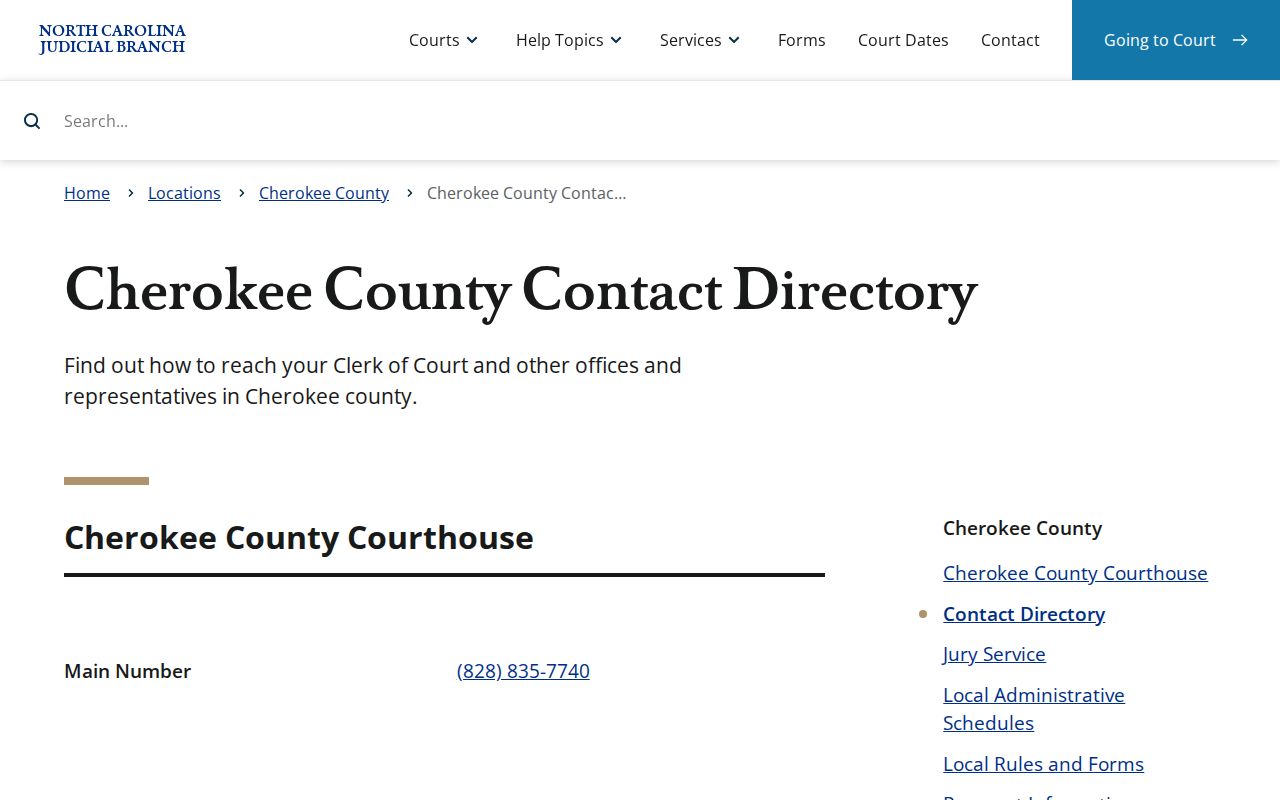
That directory helps you pick the right office directly, whether the Clerk, Superior Court judges' office, District Court judges' office, or magistrates, instead of working through a generic switchboard.
Criminal Dockets: What They Show
A Cherokee criminal Register of Actions usually sorts public information into Case Information, Assignment Information, Party Information, Case Events, Dispositions, and, where populated, Hearings and Financial Information. Read Case Events as a sequence. When later entries appear, an earlier setting is not a future setting. The Portal guide does not promise that every event has a public document image, or that every criminal record shows the same charge-code fields.
| Case number | An Enterprise Justice identifier, structured like YY[case-type]######-[county]; copy it exactly. |
|---|---|
| Assignment | The displayed court-division context, which helps distinguish a Superior Court matter from District Court handling. |
| Case Events | A chronological public event section. Read later entries before drawing a conclusion from an earlier one. |
| Hearings | A section shown when data exists; Search Hearings is the additional current-date tool. |
| Dispositions | The place to review a recorded outcome rather than treating a status label as the full result. |
| Financial Information | Shown where present, but current official amounts should be confirmed through the Clerk. |
Want the judgment, order, motion, or other filing behind an entry? Write down the case number and ask the Clerk of Superior Court for the court file. The Case Summary is only a public locator and timeline, not a certified document.
Cherokee County Criminal Docket Status
Portal status labels are handles, not full explanations. Disposed or Completed means a procedural outcome has been recorded. The Dispositions and Case Events sections supply that context. An appellate or transfer status signals movement in the case without settling every question about the outcome. That distinction keeps one filter label from being mistaken for a final account.
- Pending
- The public record remains active or unresolved in the displayed system.
- Voluntarily Dismissed with Leave
- A published criminal or infraction status that should not be equated automatically with another disposition.
- Transferred to Superior Court
- A Portal status showing that the matter has moved into the Superior Court division.
- Appealed-Appellate
- A status that signals appellate activity, not necessarily final resolution.
- Pending-Reported to DMV
- A criminal or infraction status that calls for review of the court record and any relevant agency notice.
The official status vocabulary also includes Archived, Remanded, Transfer to Another County, and Pending Expungement. A case marked Archived can still be accessed by the Clerk, who holds the official file.
Criminal Case Stages on the Docket
Criminal cases do not follow one fixed pattern. A public Cherokee docket may show charging or filing activity, an appearance or arraignment, a hearing or pretrial event, a plea or trial event, a disposition, and later sentencing or appeal activity where applicable. A magistrate can perform preliminary criminal duties as a District Court officer. Read the exact entry text as the Portal displays it. Do not expand it into an invented local code.
Docket flow: Filing or Charge › Arraignment or Appearance › Pretrial or Hearing › Plea or Trial › Disposition › Sentencing or Appeal Activity
North Carolina's Superior Court jurisdiction statute explains why an appeal or transfer can land a criminal case in a different trial division.
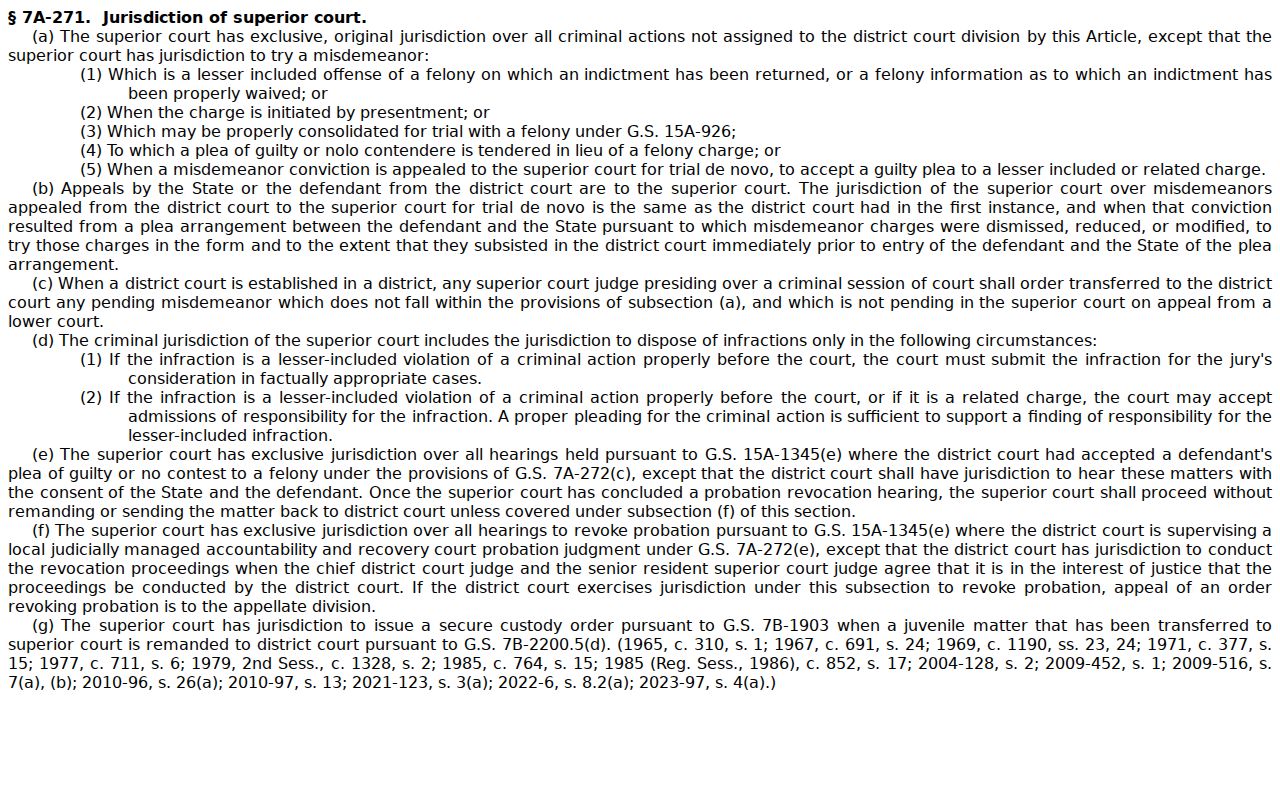
That statutory split helps explain a docket change. For any particular public case, though, the Case Summary assignment and current hearing search show how it is actually routed today.
Cherokee County 43rd Criminal Plan
Cherokee County splits some of its criminal work across the whole 43rd Prosecutorial District. That is why a plain daily county docket will not show everything. The Local Rules and Forms page posts the Criminal Case Docketing Plan for the 43rd Prosecutorial District, effective May 1, 2019. It also posts an amended 2025 criminal and civil administrative schedule. Sessions get planned at the district level. So the Portal, a published calendar, and a court office each answer a different question.
Use the Portal for a case-level Register of Actions. Use the criminal-calendar link and the schedules page for a planned session or roster. When a date looks unclear, confirm it with a Clerk or judges' office. Always check live session dates at the source. Do not copy them forward from an older plan.
Cherokee's official Local Rules and Forms page publishes both the docketing plan and the administrative schedules.
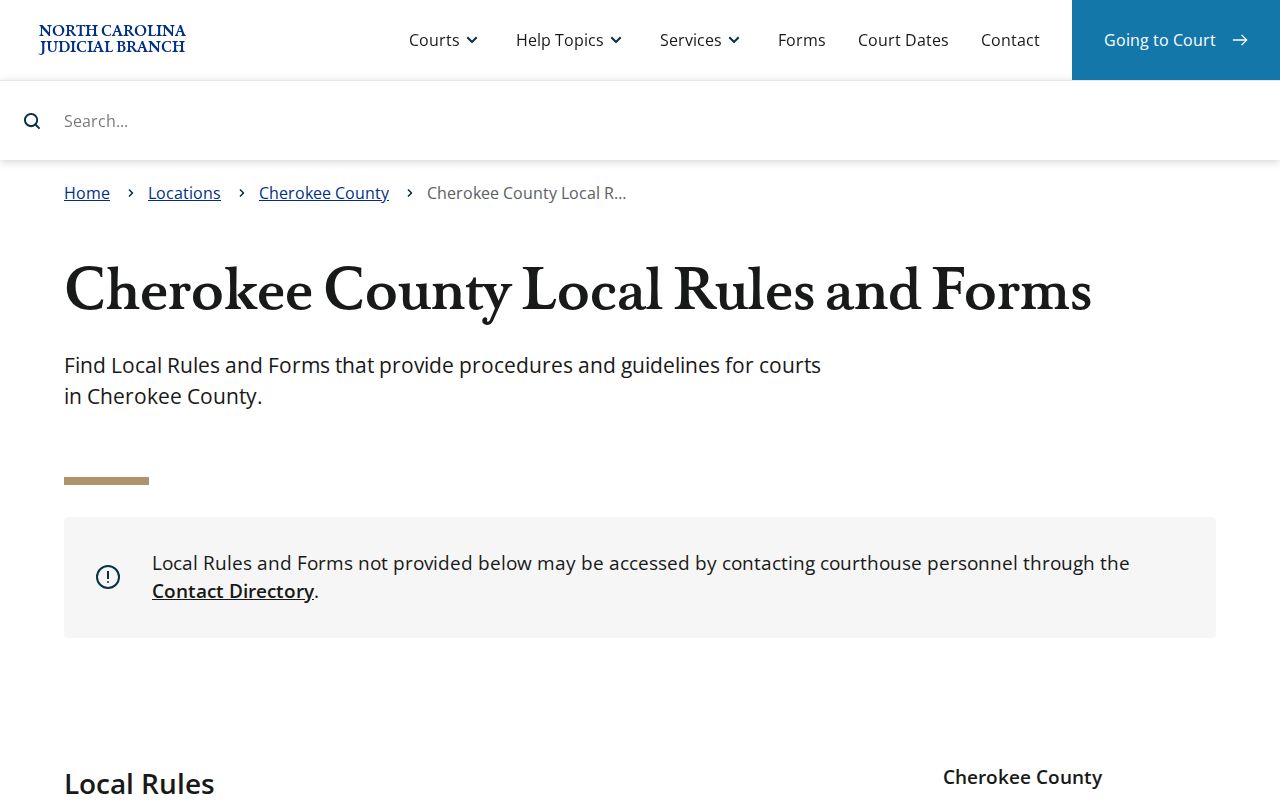
That local page adds county context. It does not replace the live Portal hearing result for a specific case.
Cherokee County Criminal Docket Courts
Cherokee divides criminal work by trial division rather than by separate criminal clerks. Superior Court, sitting in District 43A, hears felonies. It also takes any criminal action not assigned to District Court. District Court in District 43 handles misdemeanors, infractions, and traffic matters. Magistrates serve as District Court officers with preliminary criminal duties. The Cherokee Clerk of Superior Court keeps the unified county court files, acting as the local public counter for both divisions.
A District Court criminal conviction can be appealed to Superior Court for trial de novo. That means a whole new trial, not a review of what happened before. So a Portal entry marked transfer, appeal, or remand should be read with the assignment information and later events. From there, the North Carolina Court of Appeals is the intermediate appellate court. That shift happens once the trial-division process runs its course.
Cherokee County Criminal Files Beyond Portal
The Clerk is the right next stop when the public Case Summary lacks a document. The same goes for a legacy record or a needed official copy. You will find the office at the Cherokee County Courthouse, 75 Peachtree St., Murphy. Public hours run weekdays from 8:00 a.m. to 12:30 p.m. and 1:30 p.m. to 5:00 p.m. The main number is (828) 835-7740. State materials allow public self-service record terminals in clerk offices, though no terminal count or location is published for Cherokee.
Bring the case number and name the document you need. Also give the office a way to respond. The statewide fee chart puts copy preparation at $2.00 for the first page of each document. Each additional page or fraction costs $0.25. Confirm the total with Cherokee before mailing any request. A formal NCAOC public-record route is not the usual path for a county case file. NCAOC does not hold that file.
Access Rules for Criminal Dockets
North Carolina law puts the Clerk in charge of required records, files, dockets, and indexes, and the public may inspect them unless another law blocks access. Portal shows only available nonrestricted material. Sealed, confidential, and sensitive documents never appear in the public view. Juvenile records carry their own confidentiality rule. No public search can override a seal, an expunction, or any other restriction.
Public-record boundary. G.S. 7A-109 requires Clerk-maintained dockets and indexes to be open for inspection unless access is prohibited. G.S. 7B-3000 makes juvenile records confidential except as the statute or a court order allows. Portal's Register of Actions remains a public reference, not the official court record.
Some records simply sit outside the ordinary public criminal docket search. The published juvenile-record statute draws that boundary.
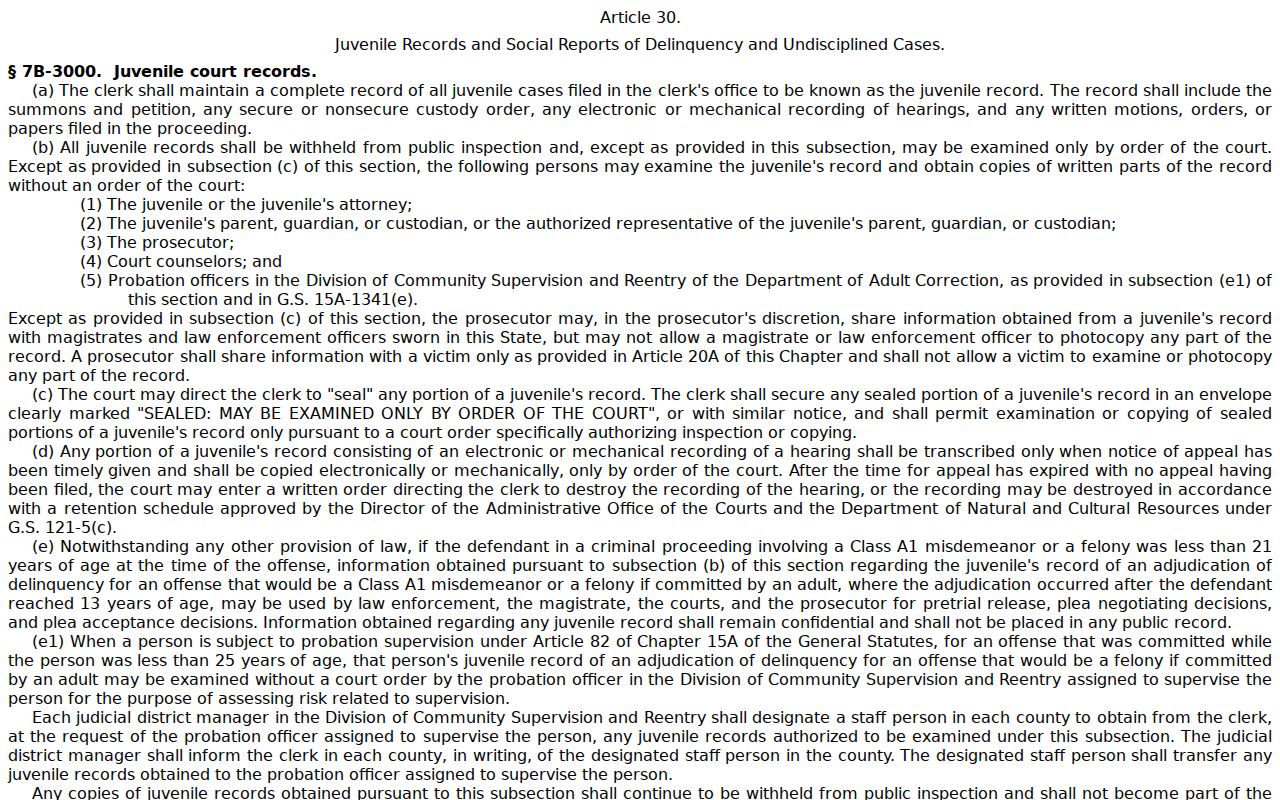
When a record you know exists fails to appear, start with the basics. Check the spelling, the precise case number, the county, and the case type. For a public document, the next step is asking the Cherokee Clerk for the public portion. Keep in mind that expunction and sealing work differently depending on the statute. North Carolina's expunction statute example shows that eligibility, filing, and fees all hinge on the applicable statute rather than a universal rule.
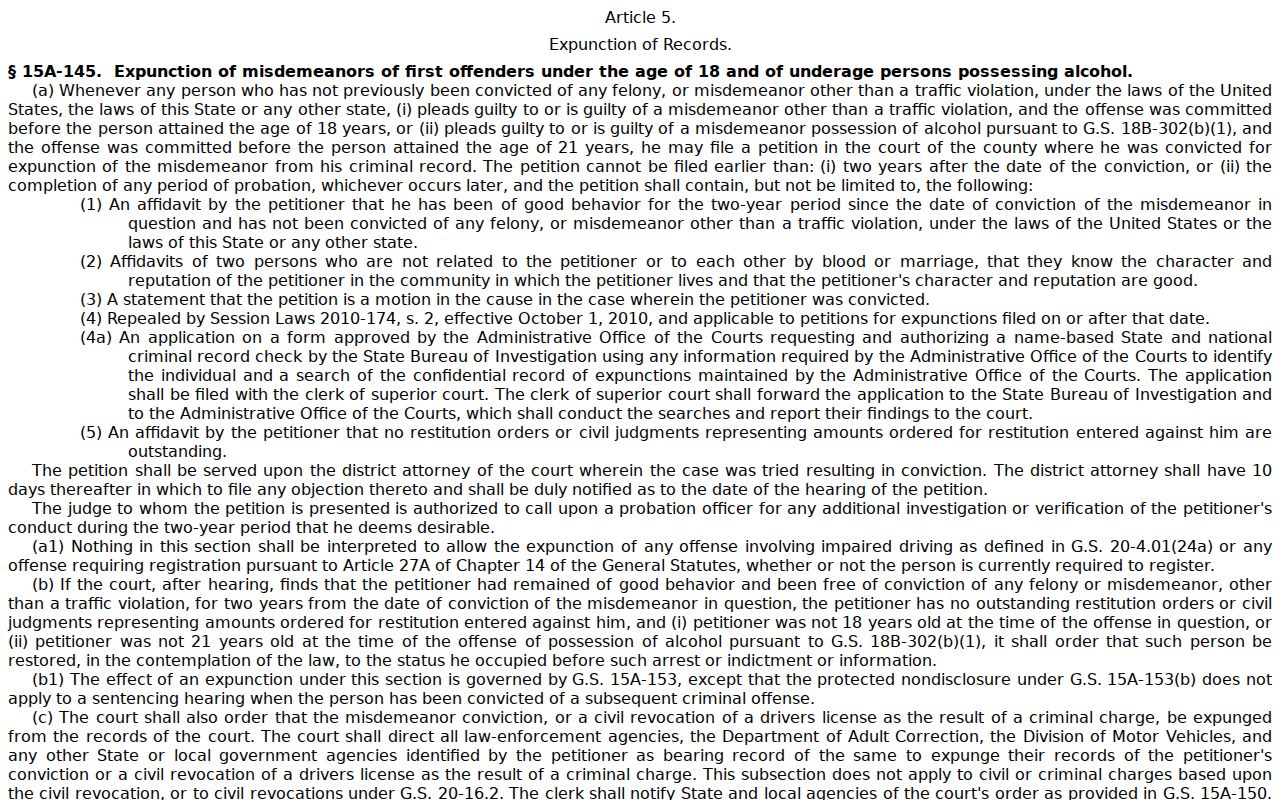
An expunction or sealing order can change what stays public. Case-specific questions belong with the Clerk and with whatever process the court has ordered.
Cherokee County Criminal Docket Data
The public Case Statistics Dashboard is a transparency tool, not a case docket. The Judicial Branch launched it on December 2, 2025. You can filter it by county or district. That view covers filings, dispositions, pending cases, case aging, and criminal categories like felony, misdemeanor, and infraction. It gives aggregate context. The Portal remains the tool for following one available Cherokee Register of Actions.
The Judicial Branch publishes no static Cherokee-only filing or disposition figure. So no number should be guessed from a statewide display without an exported, date-stamped Cherokee view. A case summary and an aggregate dashboard answer different questions. Neither can stand in for the other.